Garden Activities for May
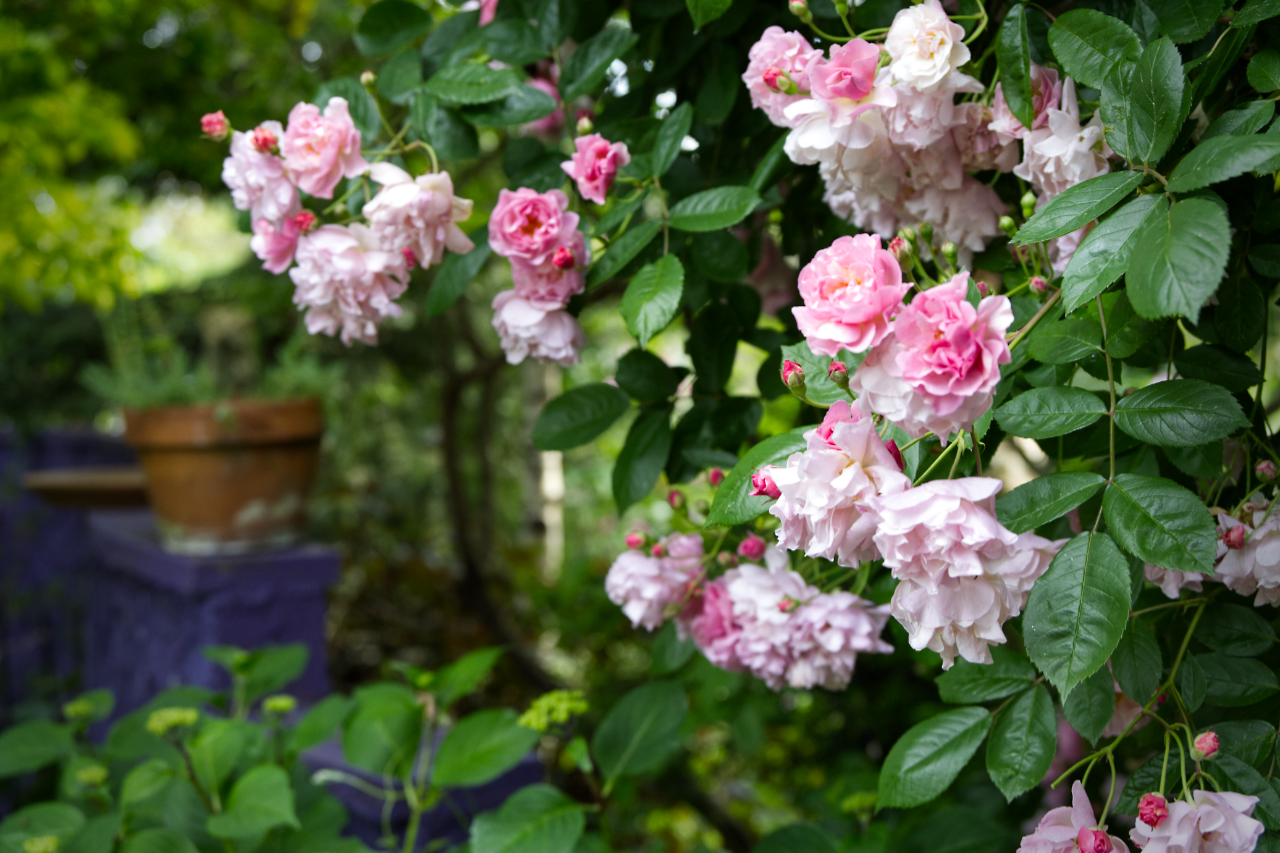
May is an exciting and busy month in the garden. Temperatures are rising, and the danger of frost has hopefully passed. Rhododendrons, azaleas, perennials, and vines are beginning to bloom. By the end of the month, roses will start their show. The major gardening activities revolve around getting vegetables and annuals planted, and getting containers ready for the season.
PLANTING
- Annuals and vegetables can be planted now, but keep a check on overnight temperatures. Temperatures below 40 can damage most plants. To help them adjust, it is best to “harden” plants off after bringing them home from our warm greenhouse. To do this, put the plants in a semi-shady spot during the daytime hours and bring them inside or cover them at night. Do this for 5-7 days before planting. After planting, cover them at night with a light cloth until overnight temperatures reach the 50s.
- Hardier plants like trees, shrubs, and perennials can be planted now. After planting, keep them watered well. A good soaking once per week is recommended until plants get established. Trees and large shrubs will need to be watered weekly throughout the summer during their first year in the ground.
- Dahlias and other plants that have been stored inside during the winter can be planted now.
- Bulbs in containers (tulips, daffodils, hyacinths, etc.) can be transferred to the ground after they are finished blooming. Allow the foliage to stay until it has browned.
- This is a good time to transplant houseplants to larger pots.
MULCHING
- Mulch not only enhances the appearance of your garden, but it also provides many benefits, including keeping weeds down and locking moisture in the ground.
- When applying mulch, be sure not to mound it up around the trunks of trees and shrubs or over the crowns of perennials.
- 2-3 inches of mulch is recommended for flower borders as well as individual shrubs and trees.
PRUNING
- Cut off spent blooms from daffodils, but leave the blades until they have browned.
- After early spring-blooming shrubs have finished (forsythia, azalea, lilac, rhododendron, etc.), they can be pruned. Remove spent rhododendron blooms by pinching them off at the base of the bloom. This is strictly a cosmetic feature. Not doing so will not affect your blooms in future years.
- Some perennials, like asters, mums, bee balm, and phlox, can be pinched to create bushier plants.
FERTILIZING
- Sprinkle granular fertilizer around newly planted roses and reapply after six weeks. For an extra boost, give them a liquid fertilizer (fish emulsion is a good one) about every 3-4 weeks.
- Potted annuals and hanging baskets should be fertilized once per week with a liquid fertilizer.
- Fertilize early-flowering shrubs like rhododendron, camellia, and lilac immediately after they have finished blooming.
VEGETABLES
- Sow or plant potatoes, pole and bush beans, broccoli, cabbage, cauliflower, leeks, pumpkins, squash, beets, carrots, chard, fava beans, kale, lettuce, radishes, and spinach.
- Tomatoes and warm-season vegetables can be planted from mid to late May as soon as soil temperatures begin to rise.
- Get an early start on weeds and keep them away from vegetable plants.
- Monitor plants closely for pests. Protect plants from rabbits and other wildlife by covering plants with wire cages.
INSECT PESTS
- Slugs will be out in full force seeking tender vegetation like your beloved hostas. Slug control pellets are available in our store. Another option is Diatomaceous Earth, a natural contact insecticide that controls slugs, ants, earwigs, and cockroaches. It is not harmful to earthworms.
- Annuals, roses, and other plants may be affected by aphids. These are tiny, almost invisible, insects that feed on the new growth of plants. They can be washed away with a garden sprayer, or you can spray with insecticidal soap. Other organic options are Neem Oil or Spinosad, both available in the store.