Butterfly Weed
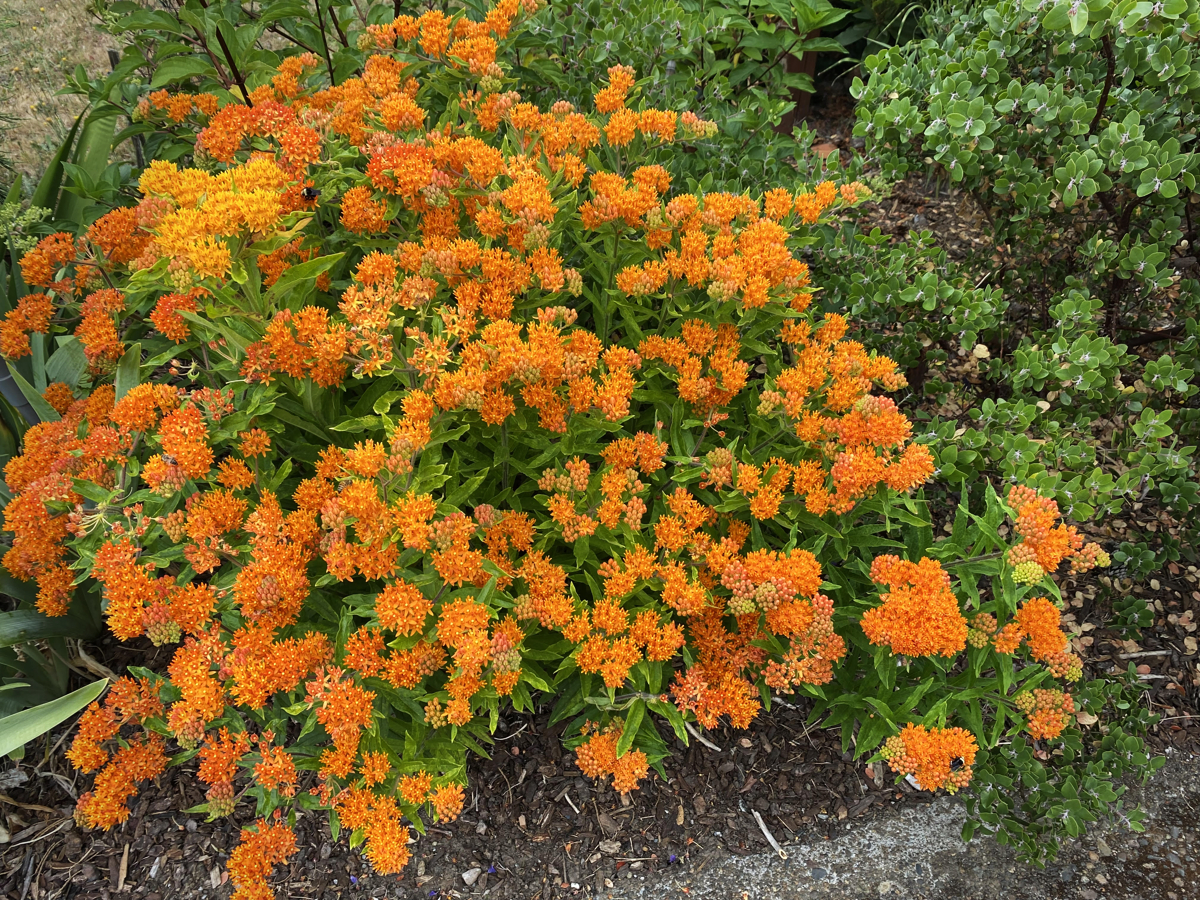
A wide variety of milkweed species are available, but perhaps the showiest—and certainly one of the most popular—is Asclepias tuberosa, better known as Butterfly Weed or Orange Milkweed. Unlike most milkweeds, it has clear sap rather than the familiar milky latex. It also behaves differently underground, forming a tidy clump instead of spreading by rhizomes. That makes it much easier to fit into a garden, although it will happily reseed if conditions are right.
Butterfly Weed is native to the eastern half of the United States, extending north into Canada and south into Mexico, but it grows beautifully in the western states as well. Its brilliant orange, star-shaped flower clusters begin appearing in June and continue well into summer. Some cultivars are available with red or yellow blooms. The flowers are irresistible to butterflies, bees, and other pollinators. After pollination, attractive seed pods develop, providing food for birds later in the season. The narrow, slightly fuzzy leaves cover a densely branched plant that remains attractive throughout the growing season.
In the wild, Butterfly Weed grows in a remarkable range of habitats, from sandy coastal areas and Rocky Mountain grasslands to meadows and open pine forests. In the garden, however, it is happiest in full sun with excellent drainage.
Butterfly Weed is a versatile addition to the landscape. It looks right at home in mixed perennial borders, adds a vibrant splash of color to more formal gardens, and is a natural choice for meadow plantings, pollinator gardens, and native landscapes.